



Probiotic applications have long been constrained by high individual variability and low non-responder conversion. The traditional "one-size-fits-all" model fails to navigate the complex interplay between host genetics, gut microbiota, and diet.
A recent review in Gut Microbes addresses these challenges through the 3PM (Predictive, Preventive, and Personalized Medicine) framework, highlighting multi-omics AI, Ramanomics, and high-throughput culturomics as pivotal technologies. While AI predicts theoretical genomic potential, Ramanomics serves as the crucial bridge to functional live bacteria by screening and isolating active single-cell microbes in real time.

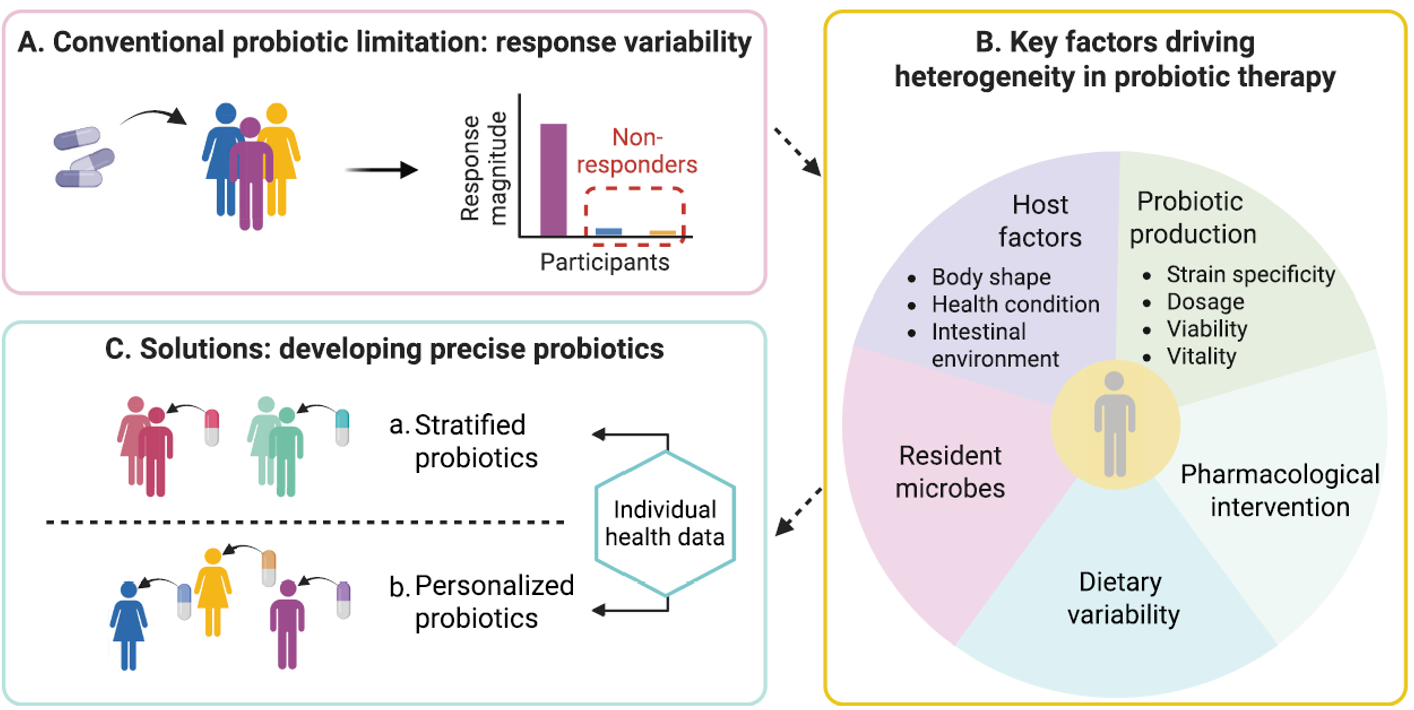
I. Why Probiotic Efficacy Varies
Efficacy is shaped by five key drivers: diet, strain specifics, baseline microbiota, medication, and individual host traits (age, genetics, immune state).
Key Insight: Permanent colonization is not always required for efficacy. Transient passage—where strains secrete bioactive metabolites and modulate microbial interactions—often drives significant health benefits.
To address host variability, precision probiotics fall into two categories:
(1) Stratified Probiotics: Tailored to defined subpopulations sharing specific demographic or microbial profiles.
(2) Personalized Probiotics: Custom-formulated to match an individual's unique microbiome, physiology, and dietary intake.
II. AI Multi-Omics: Predicting Outcomes
Moving beyond trial-and-error requires predictive modeling. By integrating longitudinal cohort data across metagenomics, metabolomics, diet, and host profiles, machine learning models can forecast colonization success, immune modulation, and metabolic dynamics.
Note: Limitations remain, including mucosal sampling constraints and cross-dataset standardization challenges.
III. From In Silico Prediction to Functional Strains: 4 Core Pillars
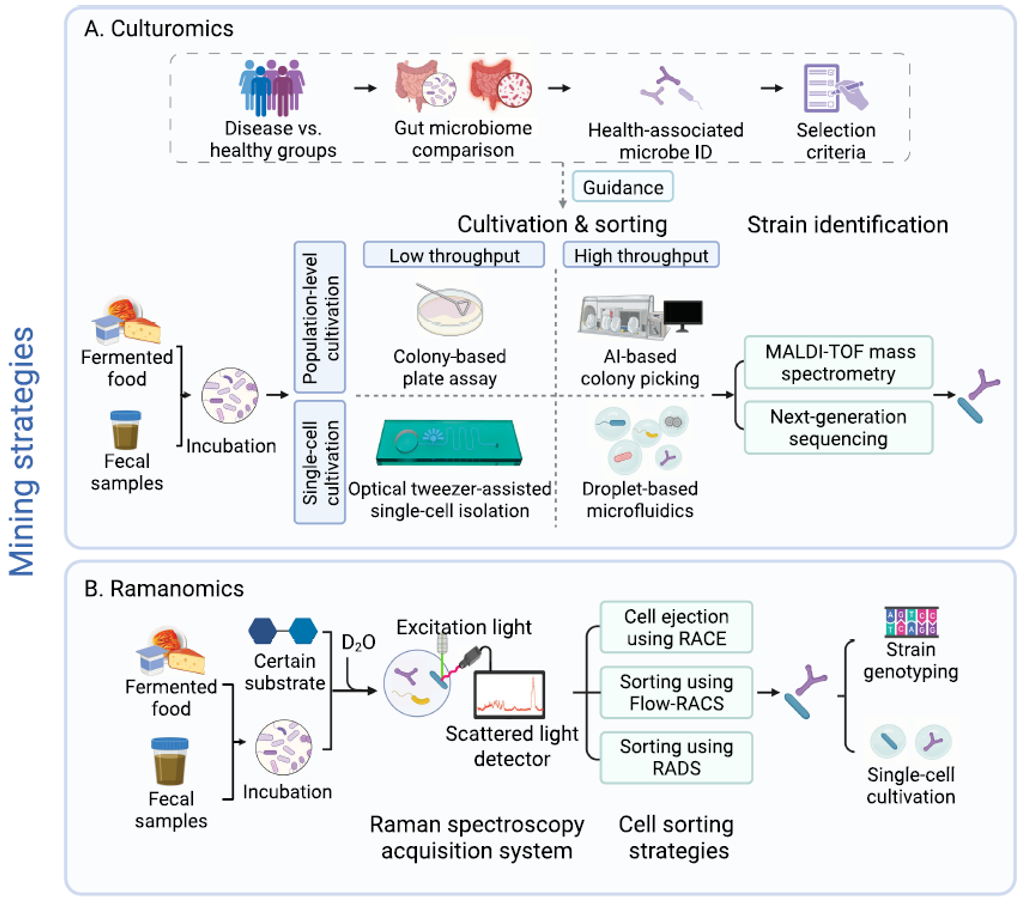
High-Throughput Culturomics
Simulating in situ gut environments via AI-assisted colony recognition and microfluidics resolves the "unculturable" bottleneck. Digital colony picking platforms (e.g., DCP) enable massively parallel single-cell culturing to isolate rare functional strains.
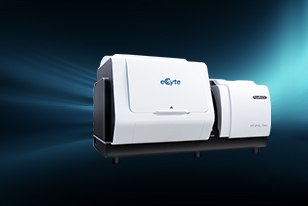
Single-Cell Functional Screening via eCyte Ramanomics
Sequencing alone cannot confirm real-time cellular metabolic activity. eCyte’s Ramanomics technology fills this critical gap. By combining label-free Single-Cell Raman Spectroscopy (SCRS) with heavy water isotope probing, active cells are identified by their signature C-D vibrational peaks. Coupled with Raman-Activated Cell Sorting (RACS), live active cells are isolated downstream for single-cell sequencing or culture. This shifts the paradigm from traditional "Culture First, Test Later" to "Function First, Sort Later". Furthermore, FlowRACS—eCyte’s high-throughput Raman-activated cell sorting system—enables single-cell quality control for commercial probiotic formulations. It simultaneously assesses species identity, viable cell counts, and metabolic activity, overcoming the limitations of standard plate counting.
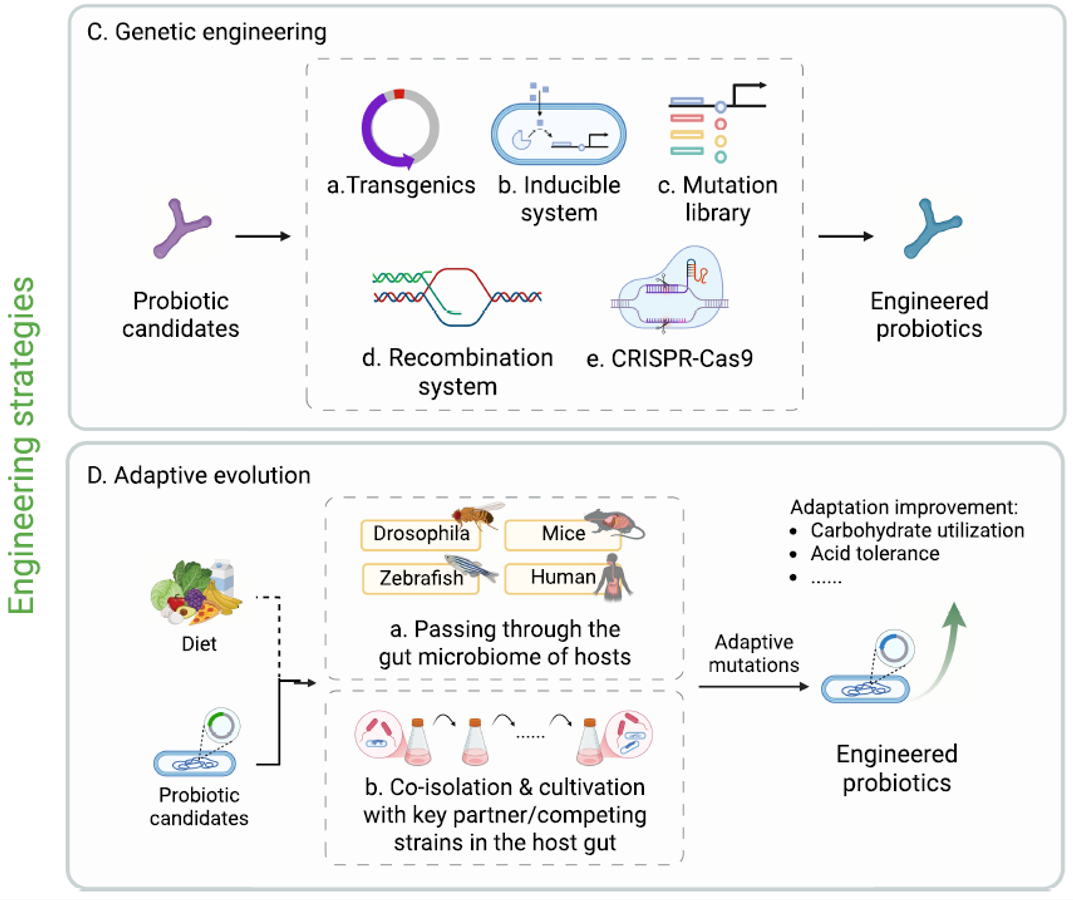
Genetic Engineering
Utilizes CRISPR-Cas9 and inducible expression systems to rationally engineer chassis strains, requiring thorough ecological and regulatory evaluation.
Adaptive Laboratory Evolution (ALE)
Passages strains within host or co-culture conditions to naturally select for stress tolerance and persistence. ALE offers fewer regulatory hurdles than gene editing and complements synthetic biology approaches.
IV. Translation & Future Outlook
Commercializing precision probiotics requires balancing cost and clinical efficacy. While chronic conditions (e.g., IBD) justify personalized regimens, stratified formulations offer a more pragmatic near-term entry point for broader applications.
The future of precision probiotics is an integrated ecosystem: Dynamic Omics Monitoring -- AI Risk Prediction -- Stratified/Personalized Strains -- Iterative Optimization
Within this framework, AI models propose candidates, while eCyte’s single-cell Ramanomics platform converts computational insights into functional, live biotherapeutic products.
Contact us and follow us for more videos on eCyte - YouTube and updates via LinkedIn.