

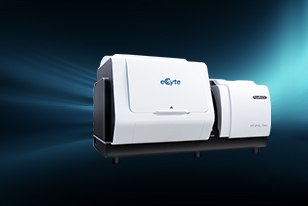


Artificial sweeteners like acesulfame-K (Ace-K) are used extensively in foods and beverages. Because human bodies barely metabolize Ace-K, vast quantities end up in municipal wastewater, surface water, and groundwater. Long considered persistent environmental micro-pollutant and sewage tracer, Ace-K resists standard chemical oxidation—often generating even more toxic byproducts. Finding a way to achieve complete biological mineralization has remained a major challenge in environmental science. Powered by eCyte’s RACS-Seq / RAMS platforms, the breakthrough study reveals how low-abundance microbes naturally evolve to degrade persistent artificial sweeteners in waste water.
A pioneering study published in the top-tier environmental journal Water Research demonstrates how single-cell Raman technology can overcome traditional bottlenecks to isolate functional degradation microbes directly from complex activated sludge.
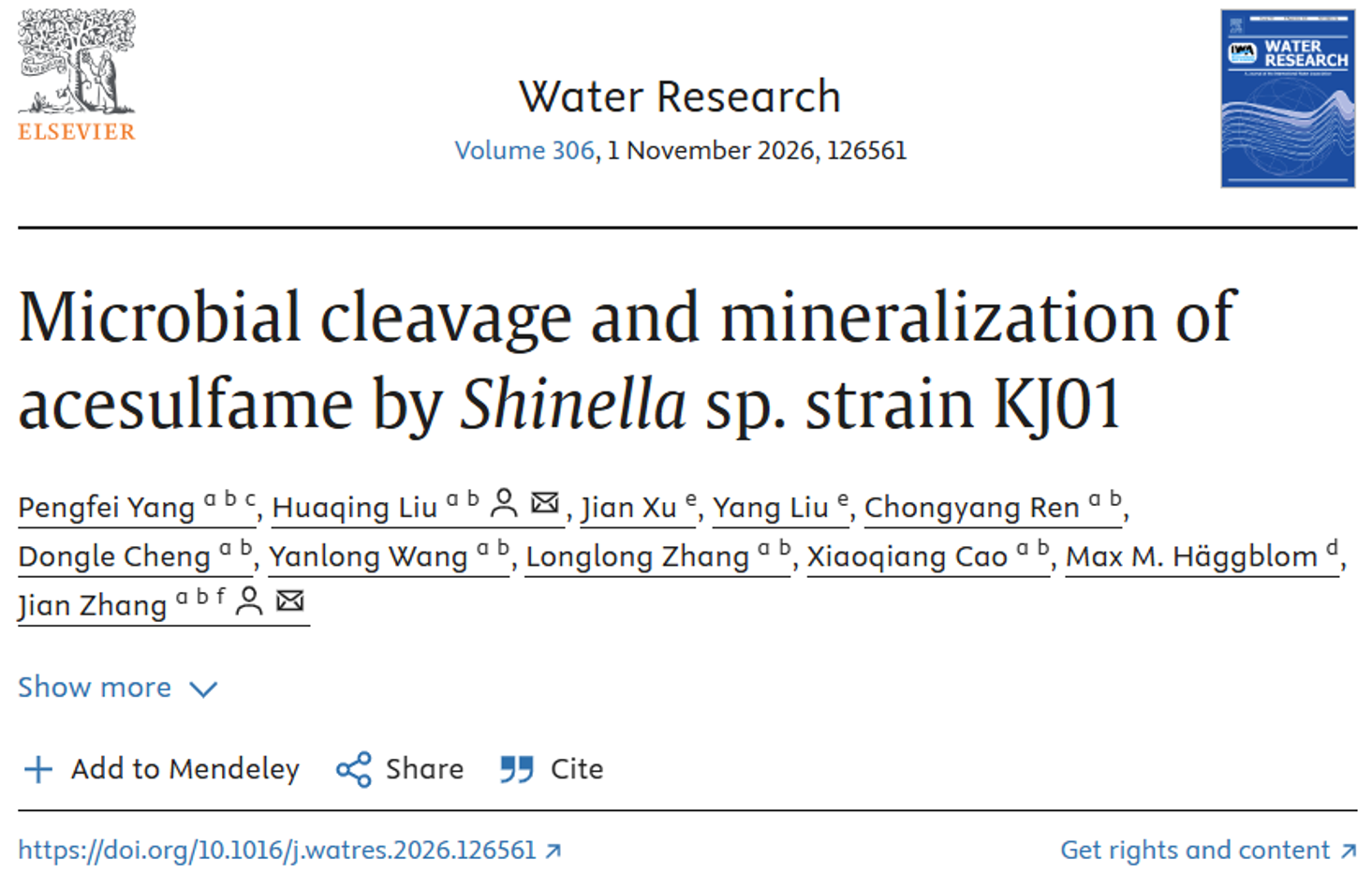
Overcoming the "Needle in a Haystack" Challenge
Identifying Ace-K-degrading bacteria in municipal sludge has historically been difficult due to their extremely low abundance. Traditional enrichment and cultivation methods are time-consuming and often cause functional strains to lose their metabolic activity after successive generations.
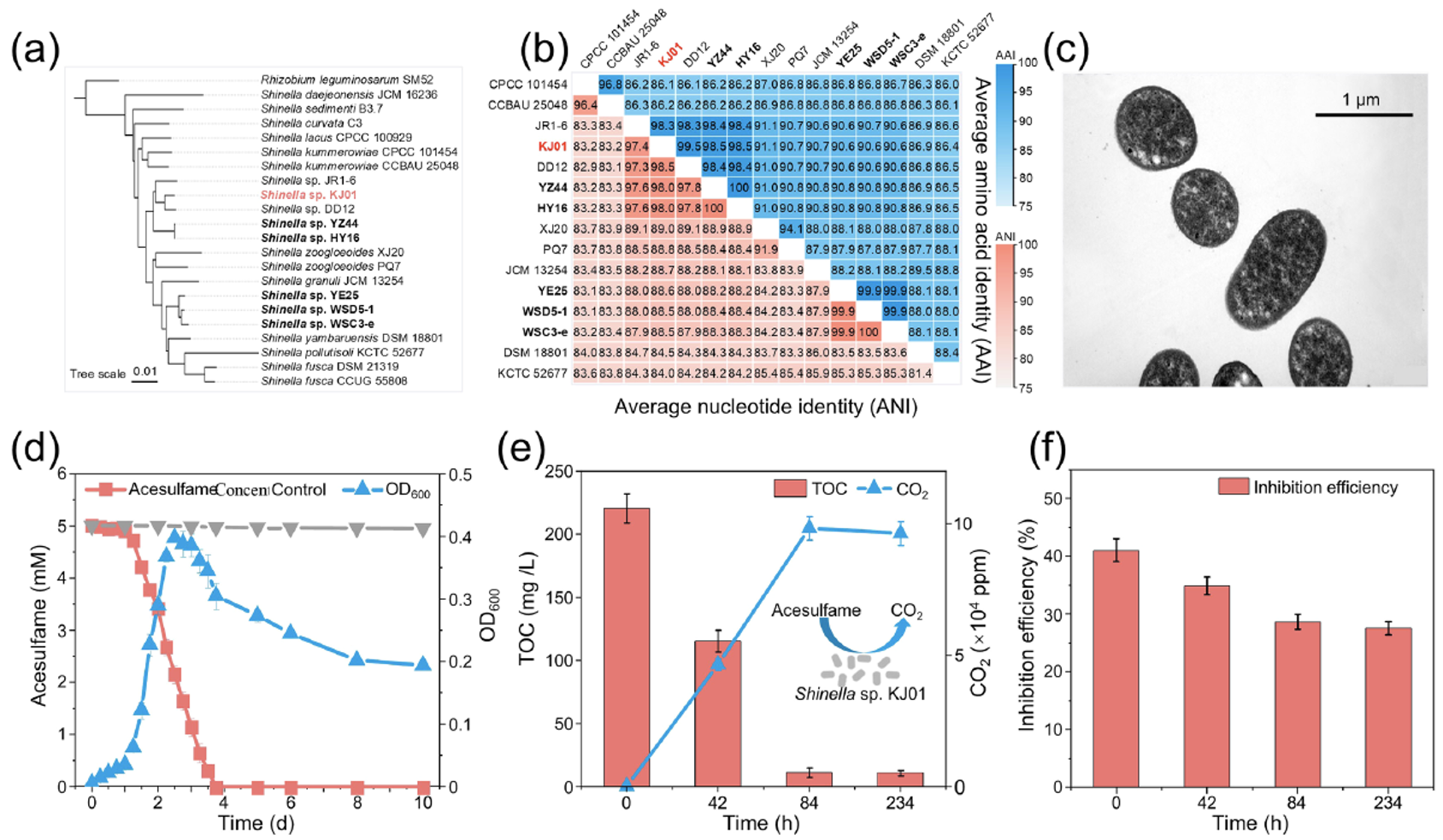
Using heavy water labeling combined with Single-Cell Raman Spectroscopy (D2O-RACS) on eCyte’s RACS-Seq and RAMS platforms, researchers bypassed tedious enrichment culture. By reading the distinct C-D Raman signatures of active cells, the team directly identified and sorted single cells capable of metabolizing Ace-K in situ. They isolated Shinella sp. strain KJ01—a functional strain capable of achieving significant Ace-K mineralization.
Key Discoveries Enabled by eCyte Technology
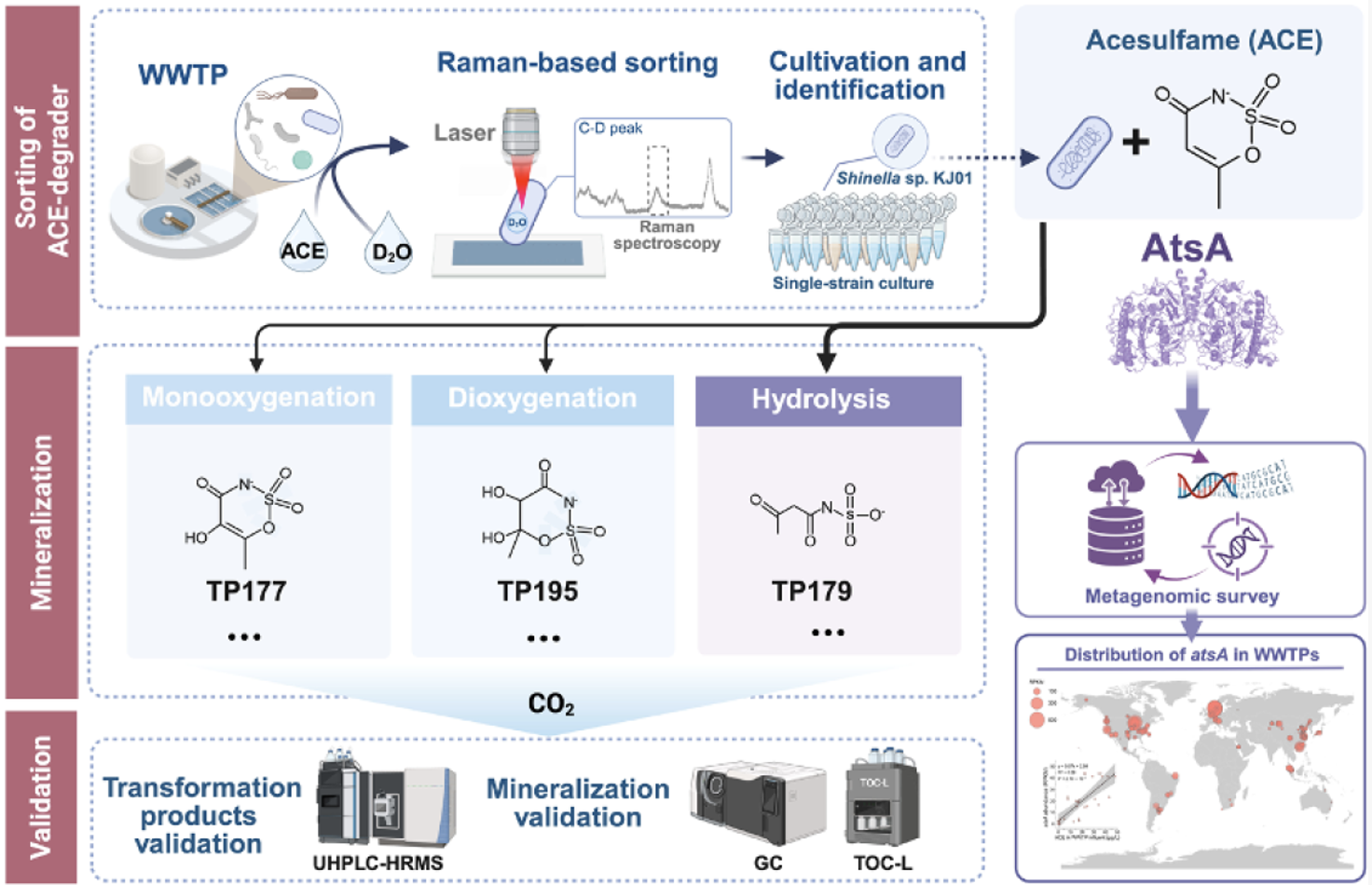
Complete Mineralization Pathway: Tracking transformation products via UPLC-HRMS revealed 8 degradation products (including 5 novel compounds), establishing hydrolysis as the primary pathway alongside minor mono- and di-oxygenation side reactions.
Pinpointing the Key Ring-Opening Enzyme (AtsA): Integrating transcriptomics and proteomics, researchers identified atsA, encoding a formylglycine-dependent arylsulfatase. In vivo expression and in vitro enzyme assays confirmed that AtsA catalyzes the initial ring-opening hydrolysis, guiding the carbon into the TCA cycle as CO2 while progressively reducing system toxicity.
Global Ecological Insight: Analysis of metagenomic datasets from over 1,000 wastewater treatment plants worldwide showed that atsA is globally distributed and positively correlated with regional Ace-K pollution loads. This highlights a powerful evolutionary response where microbial communities naturally enrich functional degradation genes under long-term chemical stress.
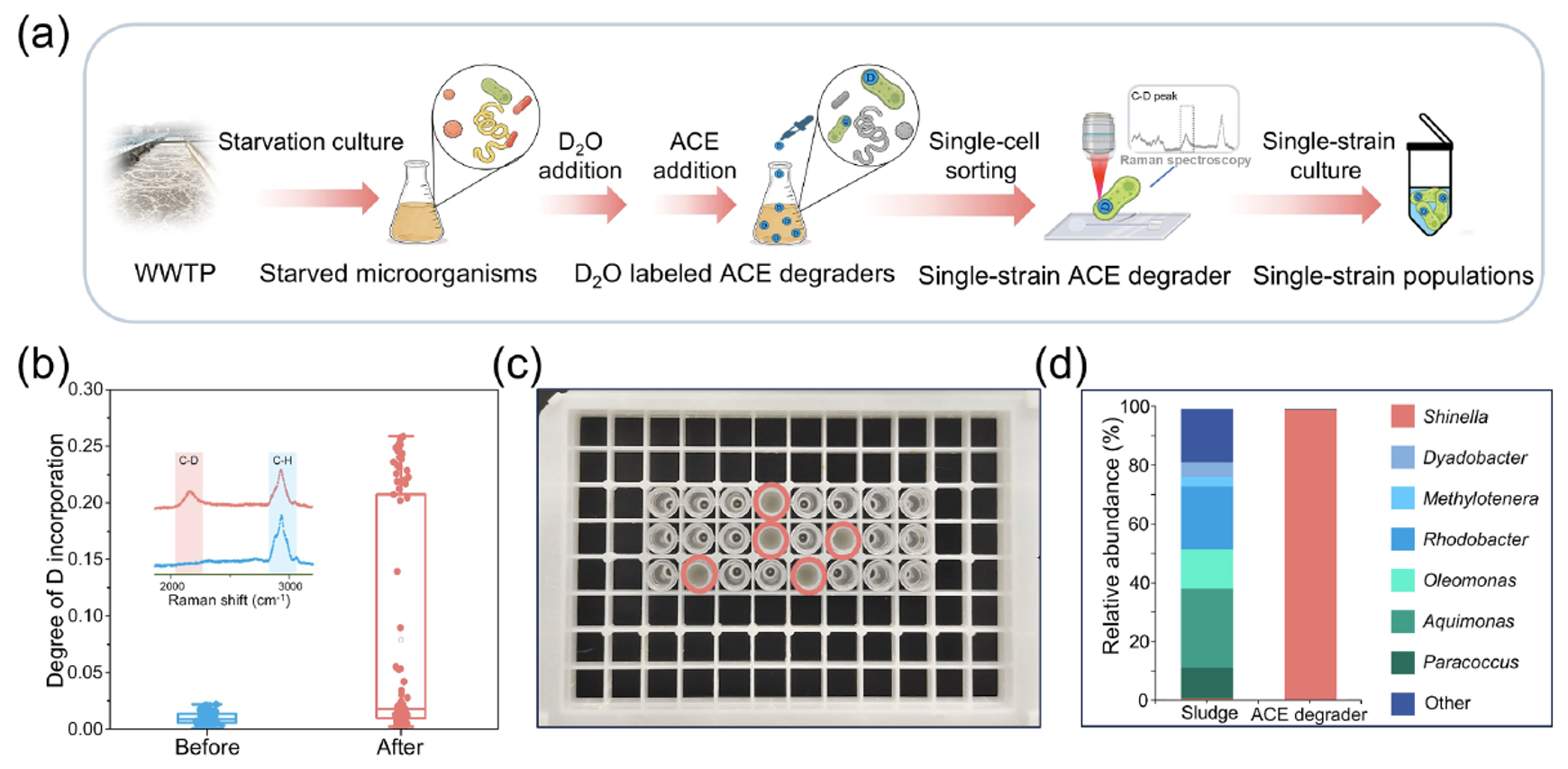
A Standardized Paradigm for Environmental Genomics & iMAPS
As a benchmark application within the global iMAPS Initiative (International Single-Cell Ramanome Metagenome Metatranscriptome Atlas Science Plan; www.iMAPS.info), this study provides a scalable, reproducible workflow—linking single-cell metabolic phenotypes, functional sorting, enzyme characterization, and global ecology.
Unlike conventional fluorescence sorting or culture methods, eCyte’s label-free, low-damage Raman platform preserves native physiological activity. Strains can immediately transition to single-cell cultivation (scRACS-Culture) or downstream single-cell multi-omics.
Partner with eCyte
eCyte remains committed to advancing single-cell Raman analysis and sorting technologies across water treatment, environmental microbiology, soil remediation, and synthetic biology. We offer standardized instrumentation, automated data analysis, and end-to-end technical support for researchers worldwide.
Interested in advancing your environmental microbiology research? Contact us to explore collaboration opportunities.