

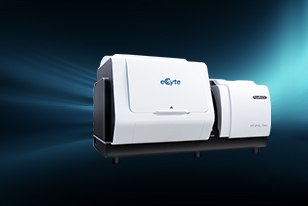


The AI-driven Digital Colony Picker (DCP), developed by eCyte, has successfully achieved multi-phenotypic, high-throughput single-cell screening. The underlying research was published in the prestigious journal Nature Communications, marking another major milestone in eCyte's technology roadmap for single-cell analysis.
Limitations of Traditional Methods
Traditional Agar Plate Culturing: Standard microbial agar plate techniques struggle to isolate rare, elite mutants occurring at probabilities as low as 1 in 10,000.
Conventional Droplet Microfluidics: Although capable of single-cell analysis, droplet systems are prone to cross-contamination and cannot dynamically track cellular growth over time.
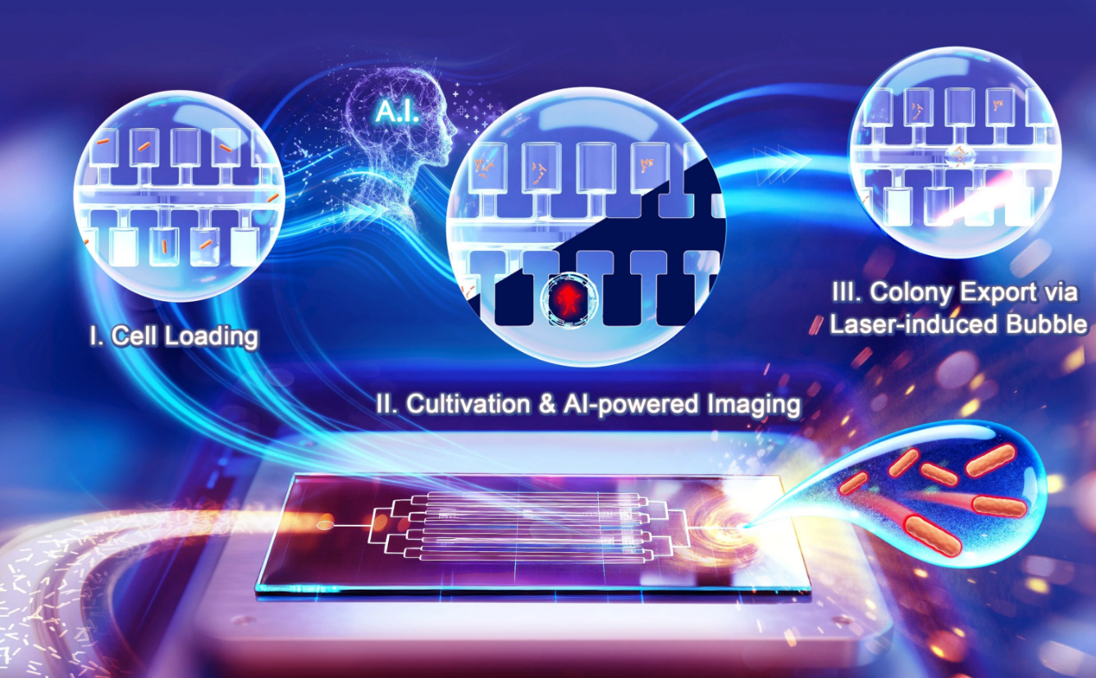
Three Core Innovations Powering a "Simultaneous Screening of Ten Thousands of Strains" Platform
By integrating three technological breakthroughs—microchamber-isolated culturing, AI-assisted image recognition, and non-contact laser-based single-colony picking—DCP delivers a seamless "one-sample loading, screen tens of thousands of strains" user experience.
High-Throughput Isolated Culturing: Microfluidic chips accommodate up to 16,000 microchambers, enabling independent single-microbial-cell culturing within individual microchambers.
AI-Powered Identification: Artificial intelligence image recognition continuously tracks real-time cell growth dynamics, metabolic activity, and morphological features.
Fully Automated Picking: Target strains are accurately recovered without cell damage using Laser-Induced Bubble (LIB) technology.
"DCP can identify and screen tens of thousands of single cells per hour, reducing time and labor by more than a hundredfold," emphasized Dr. Diao. He highlighted that DCP’s primary advantage lies in combining high throughput with exceptional precision to isolate rare, superior strains.
Case Study: 75.9% Faster Growth! Accelerating Industrial Strain Optimization
Using DCP to screen a mutant library of Zymomonas mobilis, the research team successfully isolated a "super strain" under harsh 30 g/L lactic acid stress conditions. The strain demonstrated a 19.6% increase in lactic acid yield and a 75.9% increase in growth rate.
Crucially, the study uncovered for the first time that mutation and over-expression of the auto-transporter gene ZMOp39x027 enhance trans-membrane lactic acid transport. This reveals an entirely new microbial stress-tolerance mechanism and offers precise targets for engineering industrial strains.
DCP Unlocks Diverse New Applications
Leveraging its core strengths of long-term dynamic monitoring and multi-phenotypic precision capture, the DCP platform breaks through traditional screening bottlenecks to play a pivotal role across multiple domains:
High-Throughput Strain Screening: Rapidly isolates target strains—particularly high-yielding industrial strains and filamentous fungi—accelerating cell factory construction.
Stress-Tolerant Strain Studies: By introducing environmental stress factors directly into microchambers, researchers can observe single-cell stress resistance in real time under bright-field or fluorescence imaging.
Target Strain Mining: Efficiently eliminates redundant cells to uncover rare, functional strains.
DCP serves as a powerful new platform tool for microbial resource development and specialized strain screening.
Contact us and follow us for more videos on eCyte - YouTube and updates via LinkedIn.