

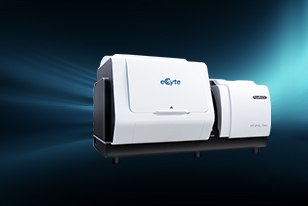


Microalgae represent highly promising, carbon-neutral "cell factories" capable of converting carbon dioxide and sunlight into high-value compounds such as lipids, pigments, and polysaccharides. However, a long-standing bottleneck has hindered the industry: taking the industrial model microalgae Nannochloropsis oceanica as an example, over half of its predicted genes remain functionally uncharacterized. This pervasive lack of genetic insight limits our understanding of metabolic mechanisms and stalls the progress of light-driven synthetic biology. To overcome this hurdle, eCyte has integrated its proprietary FlowRACS with a genome-wide CRISPR editing library. This combined platform successfully resolves the core industry pain points: uncharacterized gene functions and elusive metabolic pathways.
Case Study (Published in Nature Communications)
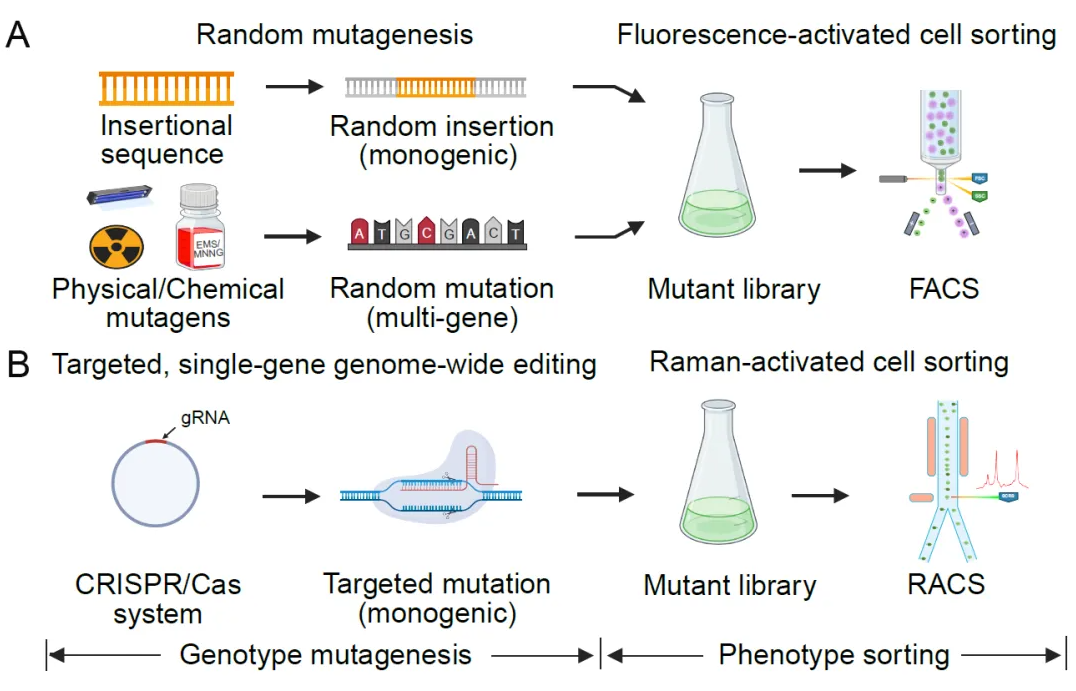
Using industrial Nannochloropsis oceanica as the model organism and carotenoid synthesis, the research team established a high-throughput forward genetics platform operating at single-cell resolution.

The 5-Hour Workflow: From Mutant Library to Target Genes via FlowRACS
(1) Sample loading of mutant library single-cell suspension
(2) Acquiring single-cell Raman spectra
(3) Setting the threshold of 1509 cm-1 peak intensity to automatically sort high-yield cells
(4) Single-tube amplification of gRNA from sorted cells
(5) High-throughput sequencing enrichment analysis to lock onto regulatory genes
Comparison: traditional screening methods—ranging from agar plate cultivation to HPLC analysis—typically take several weeks to identify high-yielding strains. In contrast, the workflow completes the entire screening and target identification pipeline within a single day, accelerating discovery efficiency by orders of magnitude.
Groundbreaking Discovery & Application
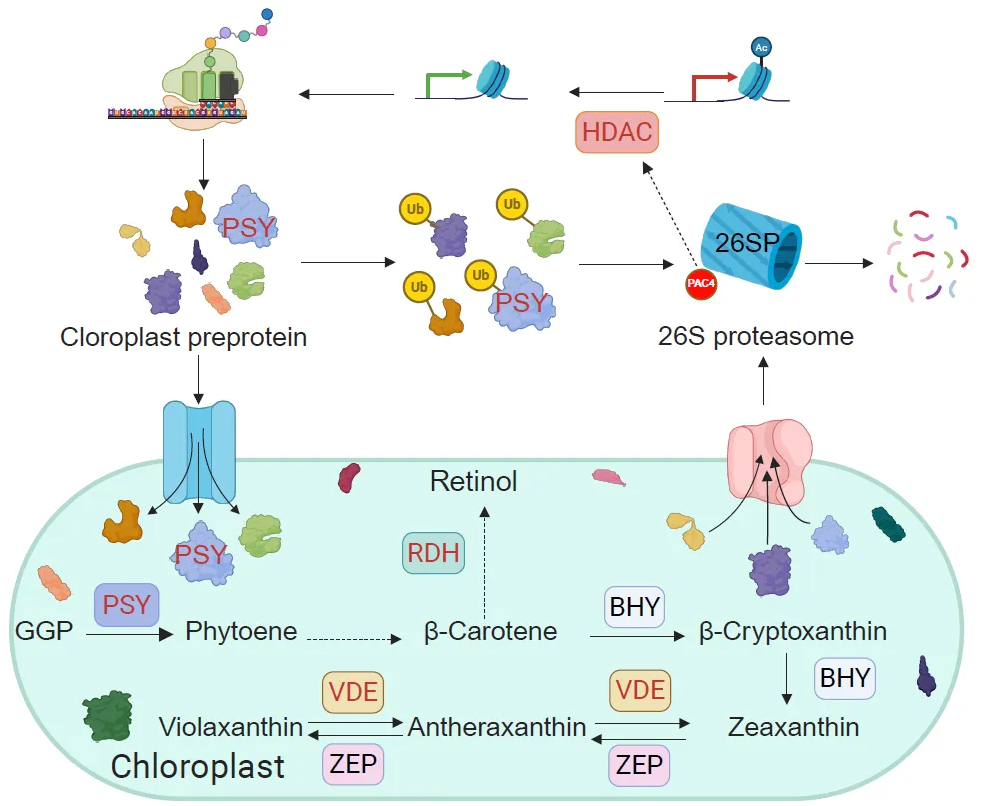
Utilizing this platform, the proteasome assembly chaperone noPAC4 was confirmed for the first time to act as a crucial regulator of pigment synthesis. Notably, knocking out this single gene concurrently enhances the yields of multiple high-value carotenoids, positioning it as an ideal engineering target for next-generation industrial algal strains.
Key Advantages of FlowRACS Label-Free High-Throughput Sorting
Raman Fingerprint Specificity: Carotenoids exhibit a distinct resonance Raman peak at 1509 cm-1. This feature allows direct, single-cell quantification without spectral interference from background chlorophyll fluorescence.
Ultra-High Throughput & Stability: Operating continuously at a sorting speed of 600 cells/minute with an accuracy of 95.97%, the system can isolate the top 1% highest-yielding carotenoid single cells from a library of tens of thousands of mutants within just a few hours.
Damage-Free Living Cell Sorting: The entire process is completely free of fluorescent dyes or chemical staining. Sorted cells remain intact and viable, enabling direct "single-cell phenotype-to-genotype" traceability.
Universal Applicability: The system seamlessly accommodates microalgae, bacteria, fungi, plant cells, and mammalian cells, covering screening across diverse metabolites including lipids, polysaccharides, pigments, and pharmaceutical intermediates.
The Platform Value: A Universal Tool for Functional Genomics Across All Cell Factories
By coupling single-gene CRISPR/Cas targeted mutant libraries with high-throughput Raman flow cytometry, this single-cell forward genetics platform bypasses the conventional requirement for sequence homology. It is uniquely structured to uncover entirely novel metabolic functions and regulatory pathways. This broad-spectrum adaptability positions the FlowRACS platform as an indispensable asset for discovering novel genetic traits across bacteria, fungi, plants, and animal cell lines alike, defining a new era for bio-manufacturing.
Contact us and follow us for more videos on eCyte - YouTube and updates via LinkedIn.