

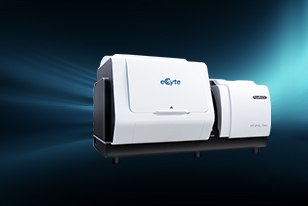


A bottleneck for China’s bio-manufacturing industry – the lack of advanced sensors for high-end bioreactors – has long constrained their development. A seemingly simple question – “Are the cells in an industrial fermenter functioning normally while synthesizing biopolymers?” – has troubled the industry for years. Traditional process analytical methods require sampling from the fermenter, transporting samples to a lab, and performing tedious, time-consuming pretreatment followed by chromatography/mass spectrometry. The results take up to two days, by which time the fermentation has long moved to the next stage. Worse, these delayed data only reflect population averages, failing to reveal “metabolic heterogeneity.” When the overall product titer looks acceptable, how many cells are “slacking off”? When the process appears stable, how is intercellular metabolic variation evolving, and is risk accumulating?

To address this industry-wide challenge, a research team has developed “process Ramanomics” technology based on the Raman-activated microfluidic single-cell sorter (RAMS). Leveraging the high-throughput single-cell Raman spectral acquisition and sorting capabilities of RAMS without fluorescent labeling, the technology obtains a biochemical fingerprint of individual cells within 12 minutes, precisely reading key parameters such as “which polymer is being synthesized, at what content, and with what monomer ratio.” It compresses the traditional two-day detection cycle to minutes and enables quantitative monitoring of changes in cellular metabolic heterogeneity, thereby guiding rational regulation of fermentation processes.
Taking the production of polyhydroxyalkanoates (PHA), an important class of biodegradable materials, as an example: PHB (polyhydroxybutyrate) and P34HB (poly(3-hydroxybutyrate-co-4-hydroxybutyrate)) are two major types of PHA. The proportion of 4HB monomer in P34HB critically affects material flexibility and demands real-time monitoring. The RAMS-based process Ramanomics platform achieves the following breakthroughs:
High-accuracy identification: Using machine learning algorithms, the platform distinguishes cells producing PHB from those producing P34HB with 99.75% accuracy, solving the challenge of identifying co-existing polymers in industrial fermentation.
Precise quantification: With characteristic Raman peaks (1722 cm⁻¹ for total PHA, 1096 cm⁻¹ for 3HB) and a simple linear regression model, it simultaneously quantifies total PHA content and monomer composition (3HB and 4HB) at the single-cell level, with a median absolute deviation below 3.8%, comparable to conventional gas chromatography.
Validation in a 5,000 L industrial fermenter demonstrated the value of process Ramanomics. Traditional methods suggested harvesting at 28 hours when total PHA content peaked at 66.32%. However, process Ramanomics revealed that the 4HB proportion was 8.67% at 26 hours (within specification) but rose to 11.28% at 28 hours (exceeding the limit). By terminating fermentation two hours earlier, product compliance was ensured without yield loss. Furthermore, single-cell resolution uncovered critical population heterogeneity: during the stable production phase, PHA content varied more than threefold among individual cells. The team established three metrics – coefficient of variation, skewness, and interquartile range – to quantify intercellular metabolic heterogeneity, and proposed a new criterion (“skewness < –0.5 with continuously narrowing interquartile range”) to determine the optimal harvest time. In the 5,000 L fermentation, heterogeneity was lowest at 26 hours, with 91.54% of cells being high producers and the 4HB ratio compliant – confirming the optimal harvest point, and breaking the traditional mindset of simply pursuing the peak population-averaged yield.
The platform has also been validated for diverse chassis and products, including protein synthesis by Saccharomyces cerevisiae and lipid synthesis by Rhodococcus. As a process big data and artificial intelligence engine, the RAMS-based process Ramanomics technology will support the development of next-generation smart bioreactors and drive independent innovation in high-end bio-manufacturing equipment. It also serves as a key pillar of the in situ Metabolic Atlas of Single Cells (iMAPS) initiative for the bio-manufacturing industry. Going forward, dozens of bio-manufacturing nodes within the iMAPS global network will collaboratively acquire and compare process Ramanomics data from typical industrial fermentation scenarios, establishing a next-generation quality control system for fermentation processes.