

eCyte Single-Cell Raman Spectroscopy Reveals How Microplastics Accelerate Soil Carbon Emissions

27 Feb 2026
A recent study using eCyte’s single-cell Raman spectroscopy has uncovered how dissolved organic matter from microplastics (MP-DOM) drives soil CO₂ emissions—shedding new light on microplastic pollution’s role in the global carbon cycle.

MP-DOM: A Readily Degradable Carbon Source
Short-term soil microcosm experiments showed that MP-DOM increased soil CO₂ emissions by 36.9%–42.3% compared to natural organic matter (NOM). UV-aged MP-DOM triggered even higher emissions—27%–43% more than non-aged MP-DOM.

The reason lies in MP-DOM’s molecular structure: it is less aromatic, less humified, and contains over 64% labile compounds, compared to only 5.7% in NOM. This makes MP-DOM a more easily digestible carbon source for soil microorganisms.

Single-Cell Evidence with eCyte Technology
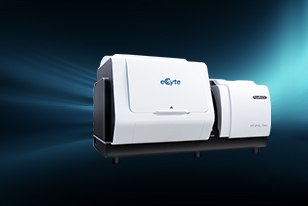
To directly assess microbial activity, researchers employed D₂O-labeled single-cell Raman spectroscopy, a core eCyte technology. This method detects C-D bonds from metabolically active cells, enabling precise quantification of activity at the single-cell level.

Results showed that MP-DOM significantly enhanced microbial metabolic activity. In black soil, the microbial activity ratio reached 0.34 ± 0.06 in the MP-DOM group, compared to 0.29 ± 0.07 in the NOM group—direct single-cell evidence that MP-DOM stimulates microbial metabolism.

Advantages of eCyte’s Raman technology:
  • Culture-independent – avoids bias from cultivation
  • Single-cell resolution – captures true microbial heterogeneity
  • Non-destructive – preserves native sample conditions

Microbial Responses and Global Implications
Beyond increased activity, MP-DOM also led to:
  • Higher microbial abundance
  • Greater carbon use efficiency (CUE): 0.73–0.75 vs. 0.55–0.60 in NOM groups
  • Enrichment of plastic-degrading microbial taxa

Global estimates suggest plastic waste in terrestrial environments may release 0.28–10.15 million tons of CO₂ annually, with hotspots in Sub-Saharan Africa, South Asia, and Southeast Asia.

Sign up for our newsletter

Join our scientific community to stay up to date with eCyte news, insights, and product updates.

  • First name*
  • Last name*
  • Email*
  • Company name*

By submitting this form you agree to our Privacy Policy and Terms and Conditions.

This site is protected by reCAPTCHA and the Google Privacy Policy and Terms of Service apply.

Return
x

About Cookies

Cookies are small text files stored on your browser when you visit a website. Widely used across the web, cookies help websites remember user preferences, improve functionality, and analyze user behavior.

At eCyte, we value your privacy. You have control over which categories of cookies you allow. Use the toggle switches below to manage your preferences. A blue toggle indicates consent for that cookie category.

You can update your preferences anytime by clicking 'Cookie Settings' in the footer of our website. For more information, please refer to our Cookie Policy.

  • Necessary
    Always active

    These cookies are essential for the website to function and cannot be disabled. They support core features such as page navigation, secure access, and service availability. Some are set only in response to actions you take, such as submitting a form. Where personal data is involved, we process it based on our legitimate interest in delivering and securing our services, in accordance with the GDPR.

  • Analytics

    These cookies help us understand how visitors interact with our site. They allow us to count visits, see traffic sources, and identify which pages are most or least popular. This information is collected anonymously and helps us enhance website performance and user experience.

  • Functionality

    These cookies enable enhanced features and personalization, such as remembering your language preference or location. They may be set by us or by third-party providers integrated into our site. Disabling these may impact the functionality of some services.